by Jennifer Dee
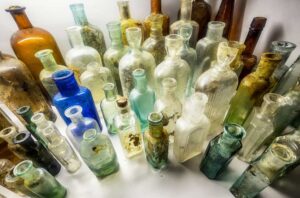 If you’ve ever been at a flea market looking at some old glass bottle and wondered if it was something super valuable or just something that would end up in the recycling, then you know exactly how it feels. That’s basically what bottle collecting used to be, with people mostly guessing, remembering little bits of advice from here and there, and sometimes checking out an old guidebook; and even though everyone was really into it, it didn’t really feel like anyone was connected. The majority of collectors just figured things out on their own through trial and error or by getting lucky and talking to someone who knew just a little more than they did.
The Internet Opened the Attic Door
Then the internet changed everything. Suddenly, collectors who once searched alone could gather in one place. A photo of an unusual embossing or pontil mark could be shared with people across the country—or across the world—within minutes. What used to take months of hunting through books or waiting for the next bottle show could now happen over a cup of coffee at your kitchen table. And if you’re anything like most collectors, you’ve probably had that moment when someone online identifies a bottle you’ve puzzled over for years.
Knowledge That Used to Be Locked Away
Before online communities, a great deal of knowledge lived inside the heads of a small circle of experienced collectors. If you didn’t know them personally, that information could be hard to reach. Forums and discussion boards changed that balance as veteran collectors began sharing insights about glass color variations, manufacturing techniques, and regional bottlers. Over time, these conversations formed an informal archive of expertise—one that any curious collector can now explore.
Learning by Looking (and Asking)
One of the most powerful things about an online community is how visual the hobby becomes. You can post a photograph of a base mark, a lip finish, or an unusual mold seam and get thoughtful feedback from people who’ve handled hundreds of similar pieces. Instead of just reading about things in books or guides, you’re actually seeing real examples and figuring it out for yourself. But perhaps the coolest part is that you’re also getting to join in on the conversation and hear what other people think.
A Hobby That Keeps the Mind Sharp
Interestingly, the benefits of these communities go beyond collecting itself. UK researchers say that if you spend time in activities where you talk, solve puzzles, and swap tips with other people, it can help fight off some of the mental slowdown that comes with getting older. Meaning, when you’re comparing bottle variations, debating manufacturing dates, or tracing the history of a small-town bottler with others, you’re doing exactly the kind of mental work researchers say helps keep the brain engaged and resilient. In other words, that late-night thread about blob-top soda bottles might be doing more good than you realize.
Helping New Collectors Find Their Footing
If you’re new to the hobby, you might feel like you stepped into a new dimension; there are colors, shapes, closures, embossings, and countless regional variations to learn about. But don’t fret, because the good news is, online communities are basically your welcoming front porch where beginners can ask questions without feeling out of place. Experienced collectors often remember exactly what it was like to start out (they were in your shoes at one point, too). Most of them are usually genuinely happy to help someone avoid the same mistakes they once made.
Why the Community Matters
Perhaps the most remarkable change is the sense that you’re never really collecting alone anymore. Someone on the other side of the world might recognize the same mold number you’re studying. Another collector might have dug a similar bottle decades earlier and kept careful notes about where it appeared. Through these shared experiences, the hobby has become a collaborative effort rather than a solitary pursuit.
Online communities make bottle collecting easier and they also help keep it alive. Collectors get to connect in ways they were not able to before, they get to share tips and stories, and they also make sure conversations keep going. There’s also the privilege of making sure that the smaller, more specialized parts of the hobby don’t just disappear over time. If you’ve ever stayed up late asking a question and then woke up to see thoughtful replies from other collectors, you probably already get it; the real treasure isn’t just the bottle sitting on your shelf but the people who helped you understand it and get excited about it.