by Martin Willis
All of us in the business like to hear about best finds that someone scoops at an estate sale, flea market, auction or by other means.
I decided not to go into my own personal best finds in this article, but will go into finds that I have heard from first hand accounts. Either I know the person, or know someone directly involved. I have many stories and can only share a few, as it would take too much writing for a single blog.
The one thing I want people to understand that have not been at this awhile is, finds are few and far in between. You may go your whole life as a dealer with a good eye and know what you are doing, and never run across a substantial one. It is like winning the lottery. I have seen people that do not have a clue what they are doing, stop at a yard sale or two and find a major treasure. There are a few examples below and it is often just dumb luck.
I will start out with a bang, the highest one I know of in the last few years.
 Only a few miles away from where I am sitting right now in Marin County, California there was an instance like I mentioned above. A gentleman that infrequently stops at estate sales decided to stop at one just outside of his neighborhood. He said there were some interesting things being offered from this particular woman’s estate. Her relatives were in town settling things, putting the real estate up for sale and selling her personal belongings. He saw what he thought was a small copy of a Picasso painting for $65 and decided to buy it. When he brought it home, he kept looking at it and thought that the work was incredible for a copy. He sent an image to a major New York auction house and the head of the painting department called him right away. The following day two people showed up at his door from that auction house and after close examination they were certain that the painting was an original piece by the artist. The ecstatic gentleman was concerned that if the painting sold at auction, the relatives of the woman’s estate may find out, so he requested a private treaty sale. After the official authentication, the auction house brokered the Picasso painting to a private buyer for an undisclosed seven figure amount.
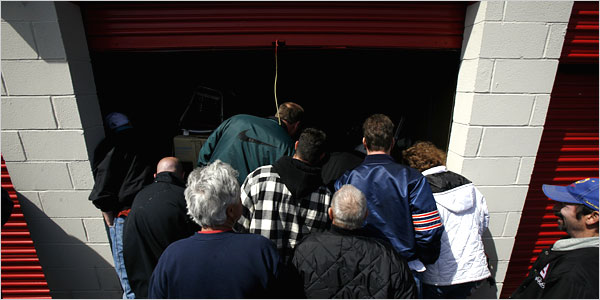 Ever since A & E’s “Storage Wars”aired, you hear all this hoopla about storage auctions. Since that time attendance at these auctions have increased by a major amount. Before you go and spend your hard earned cash at one, keep in mind it is a big gamble. About 25 years ago, my father and his good friend, fellow auctioneer Merle Straw went to such an auction and when they lifted the door to a unit, all they saw were boxes stacked high. They paid $400 for the unit and discovered it was all outdated computer paper. It cost them good money to dispose of it. The lesson I am trying to get across to you is, you will only see or hear about the great finds, but not too much about the more common duds. Keep that in mind when I tell you these two stories. At an appraisal clinic I worked at a guy came in with a big smile on his face and opened a folded sheet that contained a book. He said he bought it at a storage auction and knew it was in Spanish, but did not know what it was. I was quite excited as I was looking at an inscription that read “Santa Gertrudis” and noticed it was written in Latin as well as Spanish. After researching, I figured out it was a 1755-1768 Mission Christian Confirmation register. How it ended up in a storage locker I don’t know. It was sold for $15,000 at auction. That is not bad for the few hundred he spent. About ten years ago an active buyer of antique furniture at my auctions went through a difficult financial time and had to close down his shop and warehouse. A few years ago he was at a storage auction and when the door opened, all anyone could see was wooden crates. He did not pay too much for the unit and to his surprise it was all crated American & European high end paintings. He ended up auctioning them off for just over $900,000!
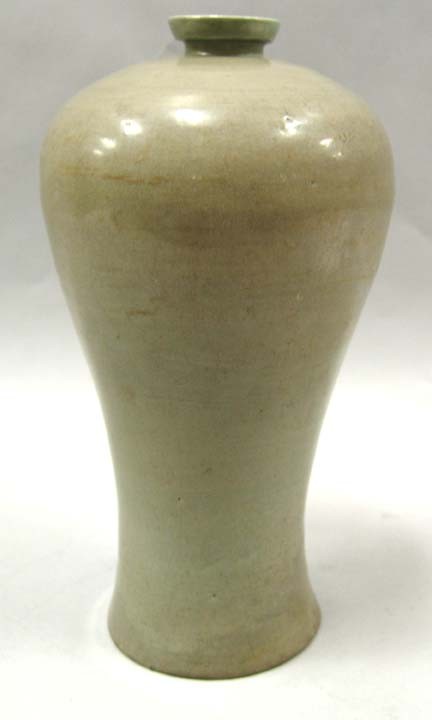 Several years ago I got a phone call from a fellow who claimed he had an old vase he just got at a yard sale and wanted to show it to me. I was going to be setting up for an auction at a busy function hall on a Thursday and I told him to meet me there. At that time there was another auction going on that Wednesday and he showed up then by accident and asked for me. The auctioneer talked him into putting the vase in their auction unadvertised and to everyone’s surprise (including me) the vase sold for an amazing $17,000. The guy actually called me to brag about what it sold for and said the rumor was it was a rare Korean vase. He also told me it was the first thing he ever bought at a yard sale and paid a whopping $15 for it. Who knows what it would have brought if properly advertised.
 I will end on this one that I mentioned it in podcast 35. Americana Exchange last year. A faithful auction attendee of mine was at a local antique shop and saw boxes of books on the floor containing a few books each for $15 a lot. After looking through them, he found the biggest find I had heard about at the time. He told me his hands were shaking when he paid for the box that contained a special book. He knew it was good, but not at the magnitude it was. The book ended up selling in New York for over a million dollars! To back up a little, the shop owner had bought an entire library of books at a public auction for a few hundred dollars the night before. When I asked him how he felt about letting the book slip through, he laughed and said, “knowledge is power”.
So I will end here for now and perhaps in a few months, I will tell some more best find stories. You are welcome to submit stories below if you wish.