The way it is From West to East

The way it is From West to East

It has been way too long since I posted my last blog. I love to write and hope to do more soon.

On my way to the Randolph Street Market in Chicago, I had left California with a day or two to spare. In taking my time, I thought I would stop at antique stores in little towns along the way. In a number of stops, people were not to crazy about the state of antique sales. However, in one store in Iowa, a man said it was his best year in the last ten. He was selling refinished oak furniture, go figure? I had to look at a calendar at a local store to make sure I had not passed through a time warp, back to 1985. … Read more

Emotions & Estimates

Emotions & Estimates

by Martin Willis

For a more recent blog after reading Marilyn’s unknown personal letters, click here.

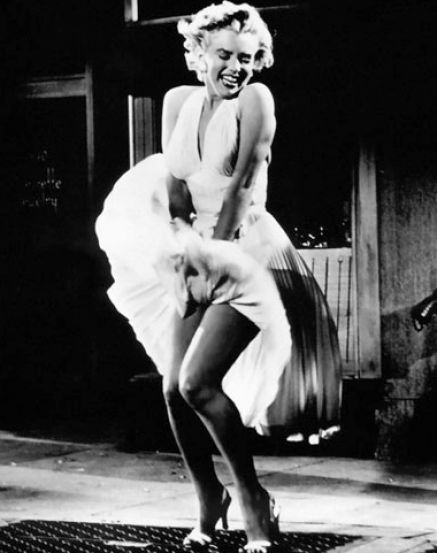
I recently had a talk with Joe Maddalena on podcast number 80 and he made a very logical statement. Prices are set by the emotional value something stirs in passionate collectors. That being said, I feel it is difficult to set prices on something like Marilyn Monroe’s famous subway vent scene dress coming up in the June 18th auction. It is estimated at $1 million to $2 million dollars. I cannot think of a more famous dress one could sell, but how do we know if $1 to $2 million is what it is really worth?

Update: the dress sold for $4.6 million.

Click here for article.

If Marilyn did not die young and was still alive today, she would be 85. If she were acting in her later years when her beauty had faded, would she still be such an icon? An example that comes to mind would be Liz Taylor, yet as iconic as Liz was, we will see Marilyn as the young image forever more. Will there be more like her in the future? James Dean and her make a boat load of money as dead young people.

My personal opinion is, if we took a 25-year-old Liz Taylor and a 25 year old Marilyn Monroe, Liz is right there on the hot meter. Yet we watched Liz age. I would say that I may have gotten a bit off track here. The point is, there is some Liz Taylor pieces coming up at auction and I am sure they will do very well. However, I do not believe her pieces will have the staying power that Marilyn Monroe’s will have in the future. This is only an opinion here, please don’t send hate mail.

I had a meeting in Carmel with a woman who interviewed me about the auction business several years ago and all of a sudden in the middle of her questioning she said, “your values of things are so subjective, they only have perceived value it seems.”  How could I argue with her? I simply said that artwork is easy to track as auction records, but that always changes. The only thing I could assure her was that cataloging in the auction business, estimates are guesses based on what we have seen similar pieces sell for. Three important things are the basis of auction estimates: Rarity, condition and demand.

Never in my life at auctions have I seen prices that make common sense go out the door as they are these days. I wish I could make sense of it all. I believe estimates that are conservative make the piece much more intriguing and help it sell the best. When you post your estimates too high, you scare away potential bidders that would have driven the price up to the right level.

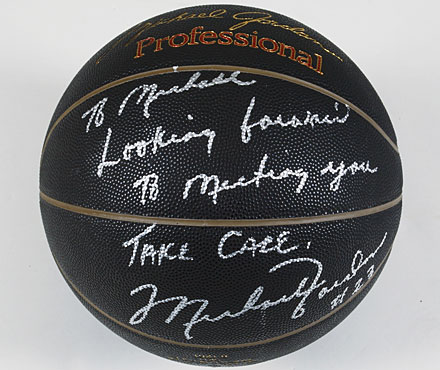
When Darren Julien told me that his $360,000 Michael Jordan & Michael Jackson signed basketball was estimated at $400-$600 it is an example that estimates do not mean a whole lot. This is another case of emotions behind the bidding.

If we do not have an emotional attachment to what we collect, then why bother collecting? It is not a good idea to collect anything as an investment and it is so plain to see as we have been on a roller coaster of prices in the market for years, especially the last few. Fortunes have been lost and some gained.  Period American furniture is all but forgotten and that is something I thought I would never live to see.

The basis of this blog today was to explore how emotional values affect the prices at auction. This does not mean the thought process goes out the window, it just means that the more emotions involved and shared by the potential bidders for a desired piece, the stronger the battle is to own it.

You yourself may get carried away at an auction as I have many times. I seem to get invested in the piece I want the higher I bid on it. There is a saying I use for humor at benefit auctions: “The more you pay for it, the more you will like it” In reality the more you like it, the more you will pay.

Thank you for reading and by the way, dying young is not recommended, no matter what the pay scale is.

Martin


The Former Message Board is Closed

Due to a high daily activity of spammers with no way to regulate or filter them out in the sign up process, we had to close the message board.

We will try to figure out how to make this page an active place to post on, but do not know if that is possible at this time.

You may post comments to this post, or any other posting, blog or podcast on our entire forum website.

We want to thank the active members on the former message board and apologize for any inconvenience.

Sincerely,

Martin Willis

The Ikea Generation…Lack of Sophisticated Collectors

by Ron Lawson

It seems almost everywhere you turn these days you do not have to go very far to notice a molded, pressed particle or stapled
flat pack piece of furniture, perhaps even in your own home. Certainly, It’s low cost appeal is foremost these days and it could be argued that it lasts several years.
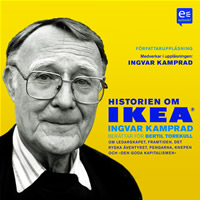
Indeed, by design that was it’s very role, Ikea was founded in 1943 by 17-year-old Ingvar Kamprad in Sweden In response to the explosion of human population and material expectations in the 20th and 21st century, the company implementing economies of scale, capturing material streams and creating manufacturing processes that hold costs and resource use down, such as the extensive use of particle board. The intended result is flexible, adaptable home furnishings, scalable both to smaller homes and dwellings as well as many larger houses. The products, widely once thought of as merely college age or dorm furniture designed to last through those years, has now become the staple for many of us.

Odd ideology when placed in comparison with the growing green movement and pertaining to the global saving of the environment.
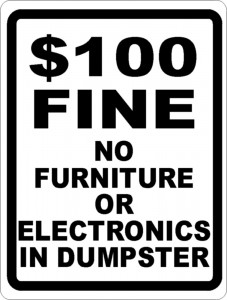
These days, as with our widely disposable use of many items, quality is secondary to use and items are simply made to be discarded as and used only when needed. This begging the question, is it quality down the drain or is it baby and bath water out the window? What I fancy calling “The Ikea mentality”.

One of the side affects to this mentality certainly is the growing lost appreciation for actual quality and craftsmanship. People seem far less interested these days with whether a piece of furniture is antique, hand made, carved or of what wood than whether it will biodegrade or simply hold a playstation or just simply accent the new 3D plasma television.

This is by no means limited to furniture, but probably is an example the most readily noticed. I would question if there are very many 20-40 something’s out there with an eye towards ever collecting furnishings by Belter, Herter or Stickley & and of those how many are ever likely to be exploring classic period–Baroque, Nouveau or other pieces…even in the style.

I unfortunately see a day when other fine antiques such as that of Tiffany, Meissen, Daum, Lalique etc., are looked on as merely odd old trinkets in lieu of the local Target chrome plated centerpiece or faux resin bronze.
While not being an elitist by any stretch of the imagination, I have witnessed a constant and steady decline in the appreciation  of antiques in general. Not just as a response to the present economy but also the fact that true style in general has declined over the last 40 years to such a degree that everything produced currently (with some exceptions) is now marginal. Here today and gone tomorrow so to speak, not intended to last generation to generation. Heirloom quality now, represents merely a descriptive marketing term most often associated with such firms as the Franklin and Danbury Mint.

Part of the love of antiques, is the appreciation of craftsmanship, it’s style and for myself…a preservation of history. The history that an item has survived and in some ways lives to speak to that time, an era or even a singular person. It evokes something deep within, as all antiques can and should. That the item will someday hopefully out last us and in some odd and perhaps romanticized fashion, we might impart a small bit of ourselves back into it. By understanding and caring for antiques, we in fact care for something, a memory far longer then the original owner could…but if able, would.

IF there is a continued loss of this appreciation, who will or could continue to preserve it?

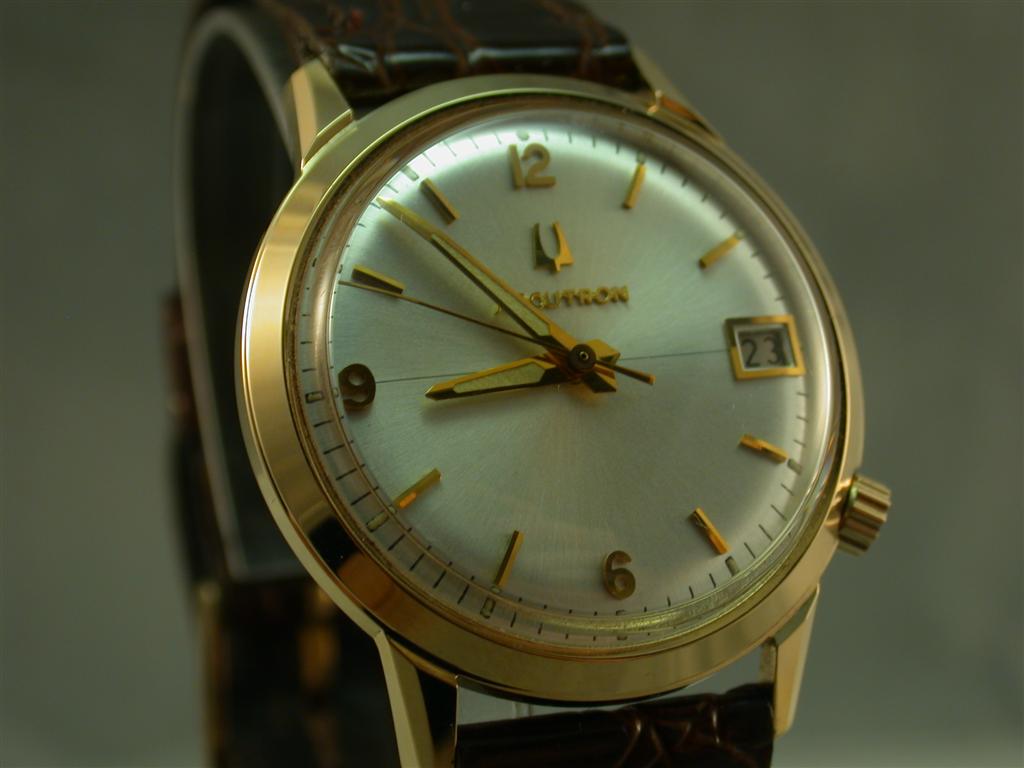
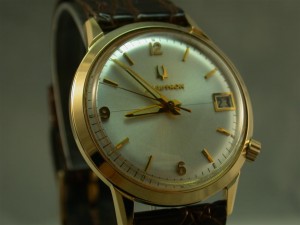
How many of us take the time to simply spend a moment with our own friends or family and explain why an antique has meaning? For example, why grandmothers Chippendale desk is special (or at least special too you), why that Baroque inlaid bureau has such a design to it. Or, for that matter, why you still wear your late fathers vintage watch.
There is an enormous amount of passion to be found in antiques, whether you collect or sell them and there is also a responsibility to preserve and help perpetuate that same passion.

Auction Diaries

by Martin Willis

One of the genesis of starting the podcast is I thought there were so many stories to tell in the business. There are so many things that happen behind the scenes that no one could imagine.

Some of the stories are not so much on the entertaining level as they are on the scandalous level. So I thought I would tell a little of both.

Read more

A word about Vintage

A word about Vintage

by Martin Willis

After my delightful podcast recording this week with the blog authors of Vintage with Vengeance, I decided to look into the world & the word of VINTAGE.

Looking vintage up in Webster’s was not too much help as it mostly pertains to wine and grapes. However, here is the closest definition on Webster’s I could find: a period of origin or manufacture <a piano of 1845 vintage> b : length of existence. [sic]

I found this posting on eBay, which I thought was interesting:

Antique vs. Vintage. Definition and differences?

Jan 14, 2004 7:17 AM

Anyone know the correct definition of Vintage? vs. ‘Antique’? If one says ‘vintage’ in a description can it mean antique? Or is ‘vintage just from the mid-20th century? I received a ‘negative’ feedback (my first) because the buyer thought the item was Antique when I described it as ‘Vintage’. I want to make sure I know the difference before I respond. I am very upset about this. Thanks for you help.
Rosemary [sic]  It is good to know that I am not the only one confused by this.

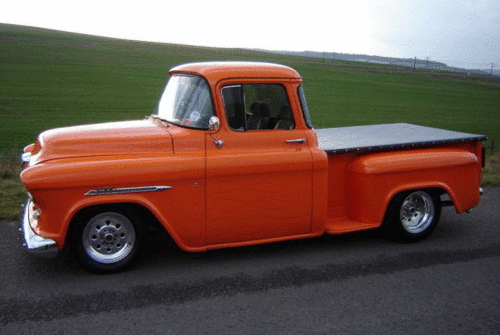
I collected a few old cars many years ago and was looking at categories of cars, what was considered antique etc. I saw the word vintage used then for old cars, yet not antique. It was the same thing with old boats.

I am speculating that vintage is a blanket term such as retro seems to be. These terms can be used indefinitely for pieces from our not so distant past. I think it is human nature to somehow look back a few years and want to recapture the good memories we associate with pieces. You see that across the board with collecting habits. eBay is a good venue to watch the trends. A few examples I have noticed in the past are:  lunchboxes, (I don’t know about you, but I liked hot lunch better) GI Joe collecting, Barbie Dolls, Cracker Jack toys, Star Wars, Teenage Mutant Ninja Turtles and even Happy Meal toys, etc.  I am not saying this stuff should be called vintage and I know I am really reaching here, but people really collect this stuff. Next it will be more contemporary items that will trend and I cannot even speculate the list.

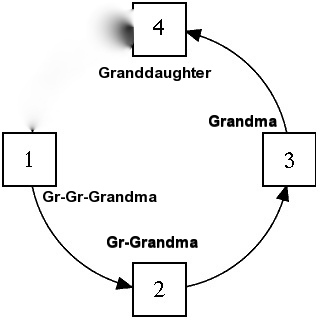
In collecting antiques, I always heard people say they liked something because their grandmother had something similar to the particular piece and it reminded them of her. To keep antique collecting alive, we can only hope that someone wants to collect something that their grandmother had because that grandmother collected it because it reminded her of her grandmother. Did I loose you yet?

On our podcast Sally Schwartz said that Vintage means something from 20 or so years ago that is good quality or something along those lines. For over 30 years in the business I have associated things from the past as good quality and better then today’s pieces. Does that mean things are consistently going down hill? If so, the future is in trouble.

It seems like when anything becomes popular from our past the first thing that happens is knock-offs. I think that is sad as they pollute the market and they are never made as well as the originals. It is not a “green” way of living either, as there is plenty of vintage stuff around to be recycled. I understand some people just plain cannot stand to own pieces that someone else owned and want only new. For those people there is no alternative I can think of. However, if you like vintage for whatever you perceive vintage to be, you can chase it at vintage shops, flea markets, thrift shops, garage sales, eBay and Craigslist.

I still do not really know what vintage means to be quite honest, I think it might mean old, but not really antique. I think retro means the same, but correct me if I am wrong.

Check out our Vintage with Vengeance blog podcast here.

Feel free to post comments on what vintage (or retro) means to you below.